

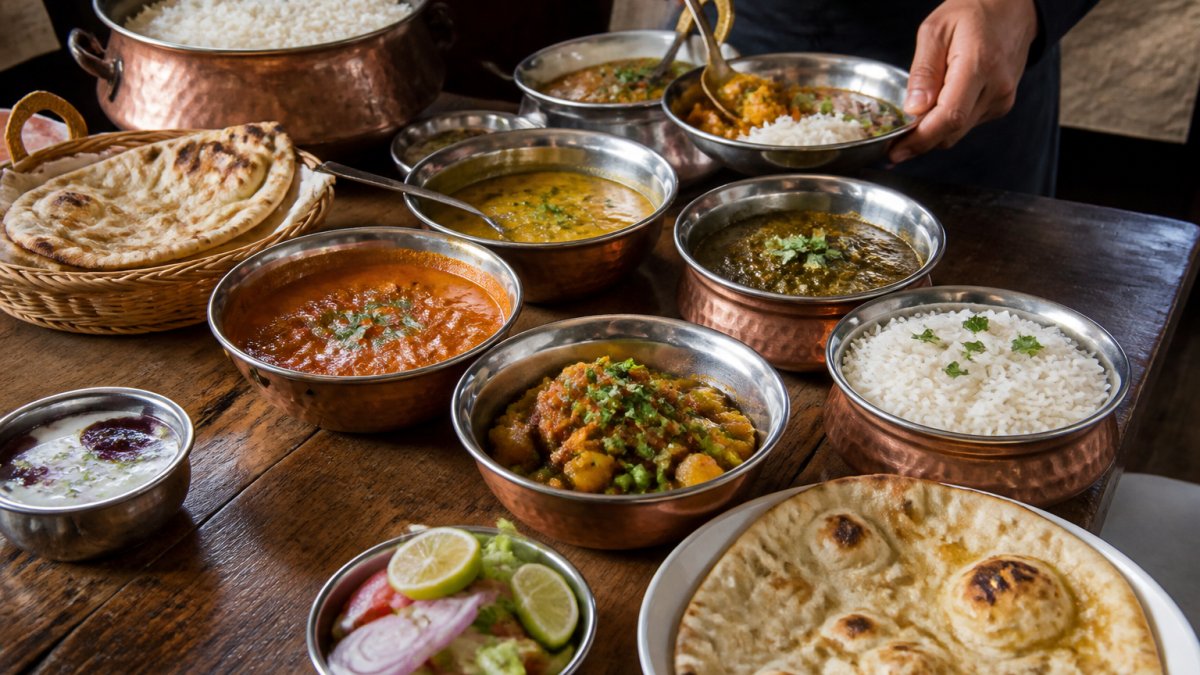
Table of Contents
- How to Choose an Indian Restaurant: A Practical Checklist
- Traditional Indian Dishes: What to Look For on the Menu
- Indian Food for Beginners: Where to Start
- Indian Cuisine Health Benefits: What You Need to Know
- How to Find Authentic Indian Food: Evaluating Your Dining Experience
- Dietary Needs, Allergens, and Vegetarian Options
- Conclusion: Your Path to Authentic Indian Dining
- Frequently Asked Questions
Last Updated: October 12, 2026
How to Choose an Indian Restaurant: A Practical Checklist
Learning how to find authentic Indian food starts with reading the room before you read the menu. At Mezwaani, we know that the best clues sit in plain sight. Look for a short, changing menu rather than a hundred dishes. Count how many tables are eating the same thing. Listen for the kitchen.
Here is the checklist we would hand a first-time diner:
- Fewer than 60 dishes on the menu, ideally grouped by region
- At least one dish you have never heard of
- Breads cooked to order, not reheated
- A separate vegetarian section with real variety, not three token sides
- Staff who can name the region a dish comes from
If a menu offers Thai, pizza and curry under one roof, the kitchen is spreading itself thin. That is not a moral failing, it is just maths.
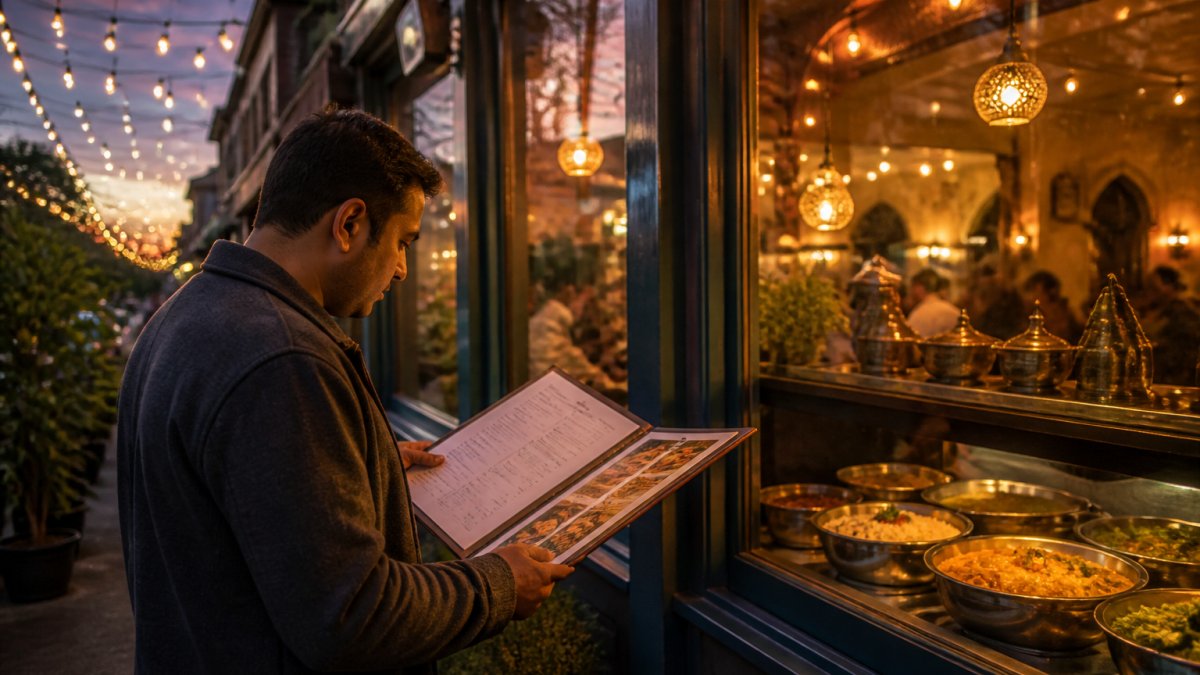
Questions to Ask Staff and Menu Clues to Look For
Ask one question: “Which dish is the kitchen proudest of this week?” A confident answer tells you more than any review. For allergen guidance, staff should check with the kitchen rather than guess, in line with Food Standards Agency allergen guidance.
Menu clues worth spotting:
- Biryani listed with a specific style, such as Hyderabadi or Lucknowi
- Masala dosa or dhokla appearing as snacks, not novelties
- Spice levels described by chilli name rather than a vague “mild, medium, hot”
- Regional names kept intact instead of renamed for comfort
How to Distinguish Regional Indian Food from British-Indian Adaptations
British-Indian restaurant food is its own tradition, and a good one. Tikka masala was shaped here, not in Delhi. But if you want regional cooking, look for dishes that do not travel well in the mainstream: sarson da saag with makki di roti, dhokla, or a proper masala dosa.
The tell is balance. Adaptations lean sweet and creamy. Regional cooking leans on turmeric, cumin, mustard seeds, curry leaves and heat that builds rather than shouts.
Traditional Indian Dishes: What to Look For on the Menu
Traditional dishes are the ones a kitchen cannot fake, because they depend on technique rather than sauce. Tandoori cooking needs a clay oven and a steady hand. A slow-cooked rogan josh needs time. Neither can be rushed.
Start with these markers:
- Chicken tikka that is charred at the edges, not uniformly orange
- Korma that tastes of cardamom, cloves and saffron rather than cream alone
- Pasanda with tenderised meat and a nut-based sauce
- Breads with blistered spots, a sign of a hot tandoor
Regional Diversity Beyond the Famous Names
Indian cuisine is not one kitchen. It is dozens. The north leans on wheat, dairy and the tandoor. The south runs on rice, coconut, tamarind and fermented batters. The west brings dhokla and vegetarian thalis. The east cooks with mustard seeds and fish.
A restaurant that understands this will let the regions show. Ours does, with street-style plates sitting beside slow curries and Indo-Chinese fusion.
Indian Food for Beginners: Where to Start
Start mild and build. Beginners get the most from Indian food when they order one creamy dish, one dry dish and one bread, then share. That way you taste contrast instead of one note.
A safe first order:
- Chicken tikka or tikka masala for something familiar
- Korma or pasanda for creamy and mild
- A rogan josh if you want warmth without fire
- Naan or roti to mop up
Mild, Creamy, and Spicy Curry Options
Mild curries are not lesser curries. Korma and pasanda are mild by design, built on nuts, cream and gentle spice. Medium dishes like tikka masala sit in the middle. Rogan josh and vindaloo bring real heat.
A common mistake is ordering five spicy dishes at once. Your palate stops registering the differences by dish three.
Indian Cuisine Health Benefits: What You Need to Know
Spices do more than flavour. Turmeric, cumin, coriander, garlic, fennel, nutmeg and star anise have been used in cooking for centuries, and many are studied for their properties. That is not a licence to call curry a health food. A creamy korma is a rich dish, and that is fine.
If you want a lighter meal, choose:
- Tomato or tamarind-based curries over cream-based ones
- Grilled tandoori dishes over fried starters
- Lentils, chickpeas and vegetable sides for fibre
- Steamed rice instead of a second bread
Ask for the sauce on the side with grilled dishes. You get the spice without the pool of cream, and you can add it back to taste.
How to Find Authentic Indian Food: Evaluating Your Dining Experience
Judging authenticity is a habit, not a verdict. No single dish proves a kitchen is ‘real’, and no single shortcut proves it is not. What you can do is score what you taste and see against a consistent set of criteria, so your judgement improves meal by meal instead of resetting every visit.
A usable authenticity checklist
Score each line from 0 to 2. A total of 12 or more out of 20 is a strong signal; below 8 usually means the kitchen is cooking to a template.
1. Spice layering (0-2)
Can you taste more than one spice at a time? Whole spices, cardamom, clove, cinnamon, bay, cumin, should be present but not shouting. A single flat note of chilli or cream scores 0.
2. Tempering and fat (0-2)
Indian cooking almost always begins with fat and aromatics. If the dish tastes watery or the sauce splits, the base was rushed. A clean, glossy finish scores 2.
3. Bread and rice technique (0-2)
Naan and roti should arrive blistered and pliable, not leathery. Rice should be separate grains, not a starchy block. Biryani should show layered colour and whole spices, not uniform orange.
4. Regional coherence (0-2)
Do the dishes on the table belong to the same tradition? A Punjabi tandoor plate next to a Keralan fish curry is fine if both are cooked well, but a menu that mixes everything without conviction usually cooks none of it properly.
5. Vegetable and lentil depth (0-2)
Vegetarian dishes are the honest test. Dal, saag, baingan bharta and chana masala take time and skill. If the vegetarian section is three token sides, the kitchen is not serious about half its menu.
6. Staff knowledge (0-2)
Can they name the region, the main spices, and whether a dish contains nuts or dairy without leaving the table? A confident, specific answer scores 2. A shrug scores 0.
7. Heat honesty (0-2)
Spice should be described in a way you can act on, by chilli type, by region, or by a clear scale, not a vague ‘mild, medium, hot’.
8. Freshness and timing (0-2)
Food arrives hot, bread steams, fried starters are crisp not oily. If the plate is warm rather than hot, the pass is not working.
9. Balance after the meal (0-2)
Authentic cooking rarely leaves you feeling coated in cream or thirsty from salt. A clean, satisfied finish is a good sign.
10. Would you order it again? (0-2)
The simplest test. If the answer is no, the score does not matter.
Questions worth asking staff
- Which region does the chef cook from?
- Which dish is the kitchen proudest of this week, and why?
- Is this dish tempered with mustard seeds or cumin?
- Does the korma or pasanda base contain ground nuts?
- Is the dal cooked today or reheated?
- Can the kitchen adjust heat without adding cream?
A good kitchen answers these without defensiveness. A weak one deflects.
Reading the room, not just the plate
- A short menu that changes with the season is a stronger signal than a hundred static dishes.
- Tables ordering the same dish is a good sign, it usually means a house speciality done well.
- A separate vegetarian section with real variety, not three token sides, tells you the kitchen respects half its customers.
- Breads cooked to order, visible from the pass, are worth more than any review.
Takeaway and delivery
Heat retention matters more than plating when food travels. Curries, biryanis and dal hold well; dosas, pakoras and tandoori breads do not. Order breads to eat first, and ask for sauces on the side so grilled dishes do not steam in transit. For allergen guidance, staff should check with the kitchen rather than guess, in line with Food Standards Agency allergen guidance.
Keep a simple note on your phone after each meal: region, dish, score out of 20, one line on what stood out. Six months of notes will teach you more about Indian food than any listicle.
This is the standard we hold ourselves to at Mezwaani, and it is why we offer online ordering for collection and delivery.
Dietary Needs, Allergens, and Vegetarian Options
Indian cooking suits dietary needs better than most cuisines, if the kitchen is honest. Vegetarian and vegan diners have real range here: masala dosa, dhokla, sarson da saag, lentil curries and chickpea dishes are complete meals, not side plates.
For allergies, always ask. Common allergens in Indian kitchens include:
- Nuts in korma, pasanda and some biryanis
- Dairy in ghee, yoghurt and cream-based sauces
- Gluten in wheat breads and some thickeners
Halal, gluten-free and vegan requests should be met with a clear answer, not a shrug. If a restaurant cannot tell you what is in a dish, that is your answer.
Never assume a dish is nut-free because it looks plain. Korma and pasanda bases often use ground nuts, and cross-contact in a busy kitchen is real. Tell staff about allergies before you order, every time.
Conclusion: Your Path to Authentic Indian Dining
Finding authentic Indian food comes down to paying attention: to the menu, the staff, the bread and the balance on the plate. Try one new dish each visit. Ask where it comes from. Build your own map of the regions.
At Mezwaani, we cook the flavours of India with a modern twist, seven days a week. Our menu covers street-style favourites, comforting curries and fusion plates, with proper vegetarian, vegan and gluten-free choices. We are built for celebrations, from a table for two to a birthday gathering for twenty.
Get started with Mezwaani and order online for collection or delivery, or book a table and taste the difference for yourself.
Frequently Asked Questions
How can you tell whether an Indian restaurant serves authentic food?
Look for regional dishes on the menu, such as masala dosa or sarson da saag, rather than only generic curry house staples. Ask staff about the spices used and whether dishes are prepared to order. Authentic restaurants often have a tandoor oven, visible in the kitchen or mentioned on the menu. Check reviews for mentions of specific dishes and regional specialties, not just ‘good curry’. A menu that lists ingredients like turmeric, cumin, and cardamom suggests a kitchen that cooks from scratch.
Which Indian dishes are good for beginners?
Start with mild, creamy curries like korma or pasanda, which use yogurt, cream, and gentle spices. Chicken tikka and tandoori dishes are marinated in yogurt and spices, then grilled, giving a smoky flavour without heavy heat. Masala dosa, a fermented rice and lentil crepe filled with spiced potatoes, is a great introduction to South Indian food. For vegetarians, dhokla (steamed chickpea flour cakes) is light and tangy. Ask the server to adjust spice levels if you’re unsure.
Is Indian cuisine healthy?
Indian cuisine can be healthy because it relies on spices like turmeric, cumin, and coriander, which have anti-inflammatory properties. Dishes with lentils, chickpeas, and vegetables provide fibre and protein. However, some restaurant curries use large amounts of cream, ghee, or oil. To make healthier choices, opt for tomato-based curries, tandoori grills, or lentil dishes like dal. Steamed rice or roti are lighter than naan. Portion control matters, as does balancing your meal with salads or raita.
What should you order if you’ve never had Indian food?
Begin with a sharing platter to sample different flavours. For mains, try chicken tikka masala (mild and creamy), rogan josh (medium spiced with aromatic spices), or a vegetarian korma. Order a side of naan or roti and steamed rice. Ask for raita to cool your palate. If you’re unsure about spice, request mild and ask for extra sauce on the side. Many restaurants offer thali platters, which let you try several dishes in small portions, ideal for first-timers.