

Last Updated: November 12, 2026
Quick Summary
Indo-Chinese fusion is the cooking that grew out of Chinese immigrant communities in India, where Chinese techniques met Indian spices and the result became a cuisine in its own right. It keeps wok cooking and soy and vinegar, but rebuilds the flavour around garlic, ginger and Indian chillies.
- Indo-Chinese cuisine history starts with migration, not with a restaurant concept.
- Calcutta-style cooking leans on garlic with a balance of heat and tang.
- Indo-Chinese sauces rely on soy, chilli, and a vinegar and garlic base.
- Order one noodle or rice dish, one dry battered dish and one saucy plate to share.
- Soy sauce contains wheat in most standard versions, so ask which sauce the kitchen uses.
Table of Contents
- What Indo-Chinese Fusion Cuisine Actually Means
- Indo-Chinese Cuisine History: From Calcutta Kitchens to British Menus
- Indo-Chinese vs Chinese Food: What Sets Them Apart
- Indo-Chinese Sauces and the Flavours That Define Them
- Popular Indo-Chinese Dishes and How to Order Them
- Dietary Needs, Allergens and Swaps in Indo-Chinese Cooking
- Where to Try Indo-Chinese Fusion in Sheffield
- Book a Table and Taste Indo-Chinese Fusion for Yourself
- Frequently Asked Questions
What Indo-Chinese Fusion Cuisine Actually Means
Indo-Chinese fusion cuisine is the cooking that grew out of Chinese immigrant communities in India, where Chinese techniques met Indian spices and the result became a cuisine in its own right. It is best understood as a two-way conversation rather than a single recipe: Hakka-style wok cooking adapted to Indian palates over generations.
That definition matters because the phrase gets used loosely. Indo-Chinese fusion is not the same as generic Asian fusion, and it is not simply Chinese food with chilli added. It is a distinct tradition with its own sauces, its own rhythm of sweet, sour, heat and savouriness, and its own menu vocabulary. If you have ever ordered chilli paneer or Hakka noodles and wondered why they taste nothing like the Chinese food you know, you have already met this cuisine.
Understanding how a multicuisine kitchen brings these traditions together helps, and our guide to why multicuisine dining suits every mood shows how one menu can hold several culinary identities at once.
Indo-Chinese Cuisine History: From Calcutta Kitchens to British Menus
The Indo-Chinese cuisine history starts with migration, not with a restaurant concept. Chinese families settled in Indian cities, most famously in Calcutta, and cooked for their own communities using local ingredients. Over time those kitchens opened to Indian customers, and the menu shifted to match local tastes.
How Chinese Cooking Adapted to Indian Tastes
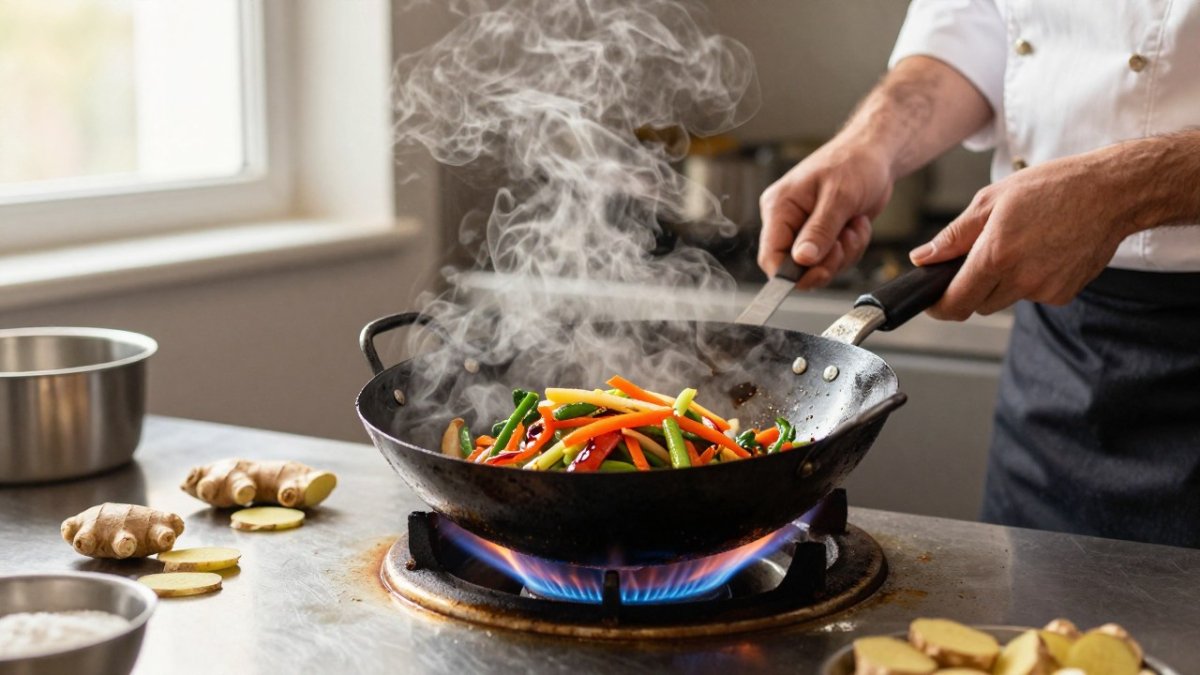
Adaptation happened in the wok, not in a boardroom. Chinese cooking techniques stayed: high heat, fast tossing, ingredients added in a strict order. What changed was the seasoning. Soy sauce and vinegar stayed in the mix, but garlic, ginger, green chillies and red chilli powder moved to the front.
A common mistake is assuming this was a compromise. It was not. Cooks kept the texture and speed of Chinese cooking while rebuilding the flavour around Indian spice preferences. That is why Indo-Chinese dishes taste bold and layered rather than diluted.
Regional Variation Within Indo-Chinese Food
Regional variation is real and worth knowing. Calcutta-style cooking leans on garlic and a distinctive balance of heat and tang. Mumbai versions often push the sweetness and the chilli harder. Elsewhere, local vegetable availability reshapes the plate entirely.
The differences are subtle enough that most menus do not advertise them.
Indo-Chinese vs Chinese Food: What Sets Them Apart
The clearest way to separate Indo-Chinese vs Chinese food is to look at the sauce. Traditional Chinese cooking builds flavour from soy, rice wine, sesame and stock. Indo-Chinese cooking keeps soy and vinegar but adds Indian aromatics and often a thicker, glossier finish.
Texture tells you the rest. Indo-Chinese menus generally lean on battered, deep-fried pieces coated in sauce, a style built for sharing. The heat is also different in character: fresh chillies and dried spices rather than the clean warmth of Sichuan peppercorn.
The two cuisines part ways most clearly at the sauce and the texture.
| Element | Traditional Chinese | Indo-Chinese |
|---|---|---|
| Flavour base | Soy, rice wine, sesame and stock | Soy and vinegar plus Indian aromatics |
| Finish | Not specified | Often thicker and glossier |
| Texture | Not specified | Battered, deep-fried pieces coated in sauce |
| Heat character | Clean warmth of Sichuan peppercorn | Fresh chillies and dried spices |
Indo-Chinese Sauces and the Flavours That Define Them
Indo-Chinese sauces are where the cuisine announces itself. Three do most of the work:
- Soy-based sauce: the savoury backbone, usually light soy for salt and body
- Chilli sauce: fresh green chillies or red chilli powder, sometimes both, for direct heat
- Vinegar and garlic base: the sour, sharp note that stops the dish feeling heavy
Flavour balance is the real skill. A good Indo-Chinese dish moves between spicy, sour, sweet and savoury without any one element dominating. Sweetness softens the chilli, vinegar lifts the soy, and garlic and ginger hold it together.
Popular Indo-Chinese Dishes and How to Order Them
Popular Indo-Chinese dishes fall into a few clear groups, and knowing them makes ordering much easier. Indo-Chinese cooking is generally built around three preparation styles: wok-tossed noodles and rice, battered and fried pieces coated in sauce, and thick gravy dishes. Many menus are organised this way.
The battered-and-sauced dishes
These are the heart of the cuisine and the best test of a kitchen. Pieces of paneer, chicken, cauliflower, baby corn or mushroom are coated in a batter, deep-fried until crisp, then tossed quickly in a glossy sauce. The batter should stay light rather than bready, and the sauce should cling rather than pool.
The noodle and rice dishes
- Burnt garlic fried rice: rice tossed with deeply browned garlic, which gives a nutty, slightly bitter edge that cuts through saucy dishes. Best alongside a gravy dish.
How to order for a table
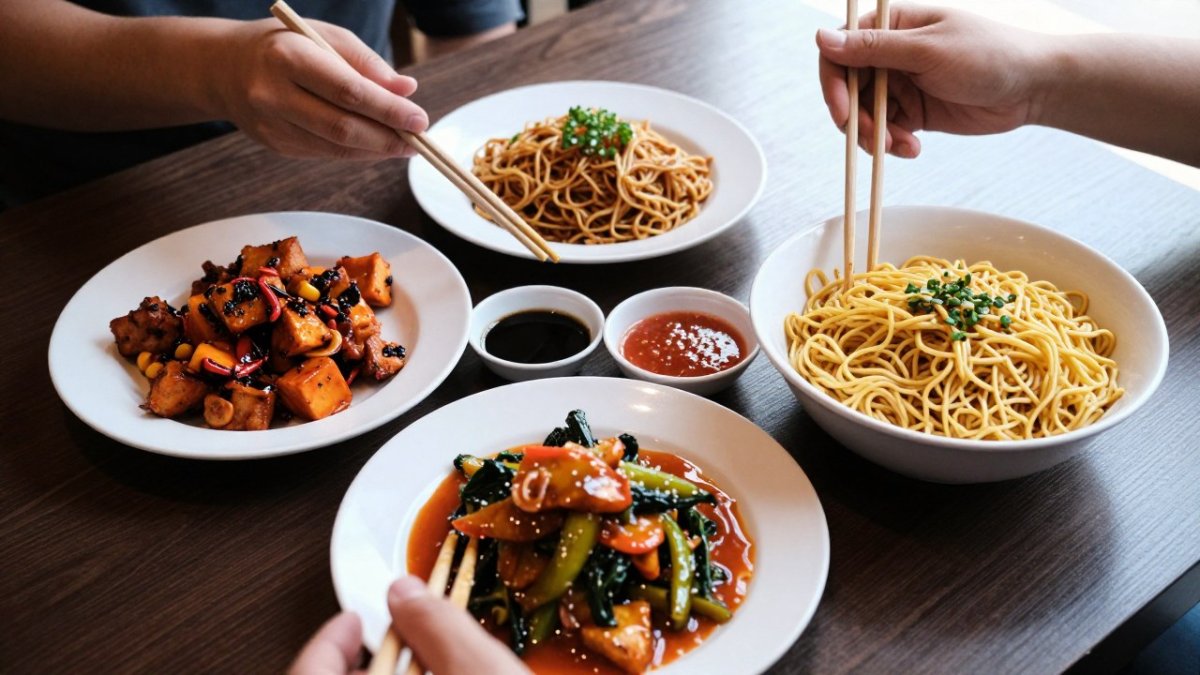
A common approach is to order one noodle or rice dish, one dry battered dish and one saucy plate, then share, which gives a mix of starch, crisp texture and sauce.
If you are new to the cuisine, start with medium heat and ask for chilli on the side. Heat levels can vary between kitchens, so it is worth confirming with the kitchen rather than assuming.
Our full menu lists the dishes we serve so you can plan before you arrive.
Dietary Needs, Allergens and Swaps in Indo-Chinese Cooking
Dietary needs in Indo-Chinese cooking are manageable, but they need a conversation rather than an assumption. Soy sauce contains wheat in most standard versions, so anyone avoiding gluten should ask which sauce the kitchen uses. Vinegar, chilli sauces and some stocks can carry hidden allergens too.
If you are booking for a group with mixed requirements, our guide to Indian fusion food for events covers portions, dietary planning and sharing plates in more detail.
Where to Try Indo-Chinese Fusion in Sheffield
Finding Indo-Chinese fusion in Sheffield means looking past the standard curry house menu. The cuisine turns up most reliably in multicuisine kitchens, where a single menu covers street-style starters, curries and wok dishes side by side.
The Mezwaani menu in Sheffield is described as a diverse multicuisine menu, including fusion options.
Book a Table and Taste Indo-Chinese Fusion for Yourself
Reading about flavour balance only gets you so far. The next step is tasting a kitchen that cooks Indo-Chinese fusion properly, with fresh chillies, real wok heat and a menu built for sharing across a table.
Mezwaani serves a diverse multicuisine menu in Sheffield with Indian flavours given a modern twist, a warm and celebratory atmosphere for friends and family, and convenient online ordering for home dining.
Get started with Mezwaani and book a table to explore our menu.
Indo-Chinese fusion rewards curiosity. Try one dry dish, one noodle dish and one saucy plate, order chilli on the side, and taste how the balance shifts. Mezwaani brings that experience to Sheffield with a multicuisine menu, a warm celebratory room and online ordering for home dining. Get started with Mezwaani and book your table today.
Frequently Asked Questions
What is Indo-Chinese fusion cuisine?
Indo-Chinese fusion is a cooking style that takes Chinese techniques such as wok cooking and deep-frying and pairs them with Indian ingredients and tastes. You will see soy sauce and vinegar alongside ginger, garlic, green chillies and red chilli powder. The result is food that is spicy, sour, savoury and often lightly sweet, with a texture and heat level that feels distinctly Indian rather than Chinese. It developed in Chinese immigrant communities in India and is now served across the UK, including on Sheffield menus.
Is Indo-Chinese food very spicy?
It can be, but heat varies by dish and kitchen. Green chillies, red chilli powder and fresh chillies are common, and dishes such as chilli paneer or chilli chicken are usually on the hotter side. Milder options like Hakka noodles, fried rice and sweet and sour dishes are widely available. If you are unsure, ask the kitchen how a dish is spiced and whether the heat can be adjusted. Many Indo-Chinese sauces are built around soy sauce and vinegar, so you still get tang and savouriness even in milder plates.
What is the difference between Indo-Chinese and Chinese food?
Indo-Chinese food uses Chinese cooking methods such as wok cooking, battering and deep-frying, but the seasoning is Indian. Soy sauce and vinegar sit next to garlic, ginger, green chillies and dried spices. The flavour balance leans towards heat, sourness and savoury depth rather than the lighter, sweeter profiles you find in many Chinese dishes. Ingredients also shift: paneer, cauliflower and Indian vegetables appear often, and vegetarian dishes make up a large part of the menu.
What should a beginner try first?
A useful approach is to start with a noodle or fried rice dish, then add one sauce-based dish, and share, so you can compare a dry dish against a gravy one. Check the menu for what is available.
