

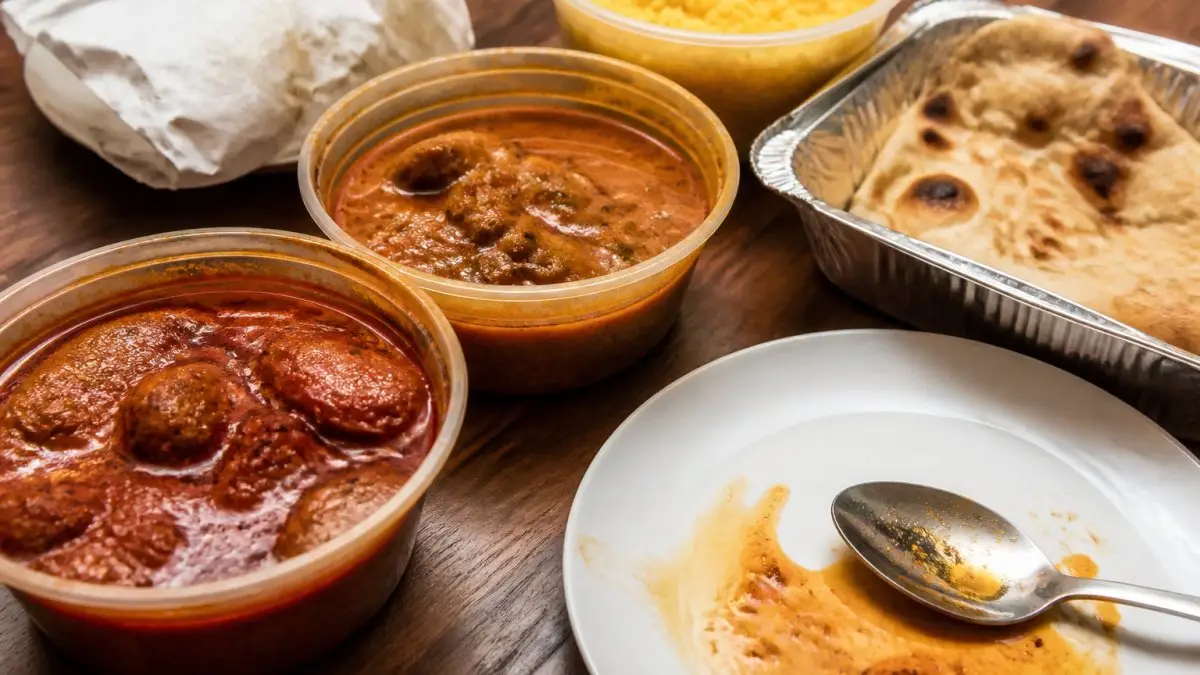
Last Updated: October 23, 2026
Quick Summary
Avoiding an oily indian takeaway comes down to asking the kitchen for less oil when you order, choosing grilled starters instead of deep-fried ones, and picking dry curries such as bhuna, jalfrezi or dal over cream-heavy dishes like korma and butter chicken.
- Ring the restaurant directly rather than ordering through an app, as kitchens are more likely to accommodate a specific request.
- Ask for steamed rice rather than pilau, which is cooked with oil.
- Reheat curries gently on the hob and skim any oil that rises to the surface.
- Never reheat rice more than once, and eat it within 24 hours of cooking.
- Order one richer dish for the table and balance it with grilled starters and dry curries.
Table of Contents
- Why Some Indian Takeaways Turn Up Oily (and How to Spot It)
- How to Ask for Less Oil in a Curry When You Order
- Choosing a Less Oily Indian Curry: What to Look For on the Menu
- Lighter Indian Takeaway Starters That Skip the Grease
- Healthy Indian Takeaway Options in Sheffield: What to Order
- Reheating and Serving Tips to Keep Your Takeaway From Turning Greasy
- Frequently Asked Questions
Why Some Indian Takeaways Turn Up Oily (and How to Spot It)
Ordering an oily Indian takeaway should end with a satisfied sigh, not a pool of grease at the bottom of the container. Yet avoiding oily Indian takeaway meals is one of the most common frustrations we hear about at Mezwaani, our Sheffield kitchen. The good news: oiliness is usually a choice, not a necessity.
Oil shows up for three main reasons. Some kitchens fry at too low a heat, so food soaks up fat instead of sealing. Others rely on cheap base sauces made in huge batches, topped up with oil to stretch them. And plenty of dishes are simply designed to be rich, which is fine until every item on the menu arrives the same way.
How to spot it before you order:
- Reviews that mention “swimming in oil” or “greasy” repeatedly
- Photos showing a visible oil slick on curry surfaces
- Very low prices across a large menu, which often signals batch cooking
- No option to request adjustments
The NHS Eatwell Guide recommends choosing dishes lower in saturated fat where you can, and a takeaway is no exception. A little ghee or mustard oil carries flavour. A centimetre of it floating on top does not.
If your curry has a thick oil layer you can spoon off before eating, that is a sign the kitchen is using fat as a shortcut for flavour. It also means you are paying for oil, not ingredients.
The dishes most likely to arrive swimming in oil
Some classics are riskier than others. Creamy curries, deep-fried starters and anything described as “rich” or “buttery” tend to carry the most fat. Dishes cooked in a tandoor or on a dry griddle usually arrive far lighter.
How to Ask for Less Oil in a Curry When You Order
The simplest fix costs nothing: ask. Most kitchens will adjust a dish if you request it clearly when ordering, and learning how to ask for less oil in a curry is easier than most people expect.
Here is exactly what to say:
“Could I have the [dish name] cooked with less oil, please? I’d rather it be a bit drier than greasy.”
That phrasing works because it tells the kitchen what you want, not what you are accusing them of. It also gives them an easy way to say yes.
Other requests that help:
- Ask for the sauce “on the side” so you control how much you eat
- Request grilled rather than fried starters
- Ask whether the dish can be made with less cream or coconut milk
- Check if they offer a lighter or “slim” version of popular curries
Ring the restaurant directly rather than ordering through an app. Phone orders give you a real conversation, and kitchens are far more likely to accommodate a specific request than a note buried in an online order form.
If you order online, use the special instructions box, but keep it short. “Less oil please” gets read. A paragraph does not.
Choosing a Less Oily Indian Curry: What to Look For on the Menu
A less oily Indian curry is usually one that is cooked dry or with a thin, water-based sauce rather than a thick, cream-heavy base. Learning to read the menu is half the battle.
Lower-oil options to look for:
- Bhuna – cooked down until the sauce clings to the meat
- Jalfrezi – stir-fried with peppers and a sharp, light sauce
- Tandoori or tikka dishes – grilled, not swimming in sauce
- Dal – lentil dishes are naturally low in fat when not overloaded with ghee
- Dry-fried vegetable dishes – saag, aloo gobi and similar Pairing these lighter preparations with healthier drink alternatives ensures that the overall meal remains balanced and refreshing.
Higher-oil dishes to treat with caution:
- Korma, pasanda and butter chicken, which rely on cream and butter
- Anything described as “rich,” “creamy” or “mild and smooth”
- Deep-fried starters such as samosas, pakoras and onion bhajis
The British Heart Foundation’s guidance on fats notes that saturated fat raises cholesterol over time, so swapping a korma for a bhuna is a small change with real benefit.
| Dish style | Oil risk | Why | Better swap |
|---|---|---|---|
| Korma / pasanda | High | Cream and butter base | Bhuna or jalfrezi |
| Butter chicken | High | Butter and cream finish | Tandoori chicken |
| Biryani | Medium | Layered with oil and ghee | Plain rice with a dry curry |
| Bhuna | Low | Cooked down, little free sauce | Keep as is |
| Dal | Low | Lentil base, minimal fat | Ask for less ghee |
| Tandoori dishes | Low | Grilled, not fried | Keep as is |
Lighter Indian Takeaway Starters That Skip the Grease
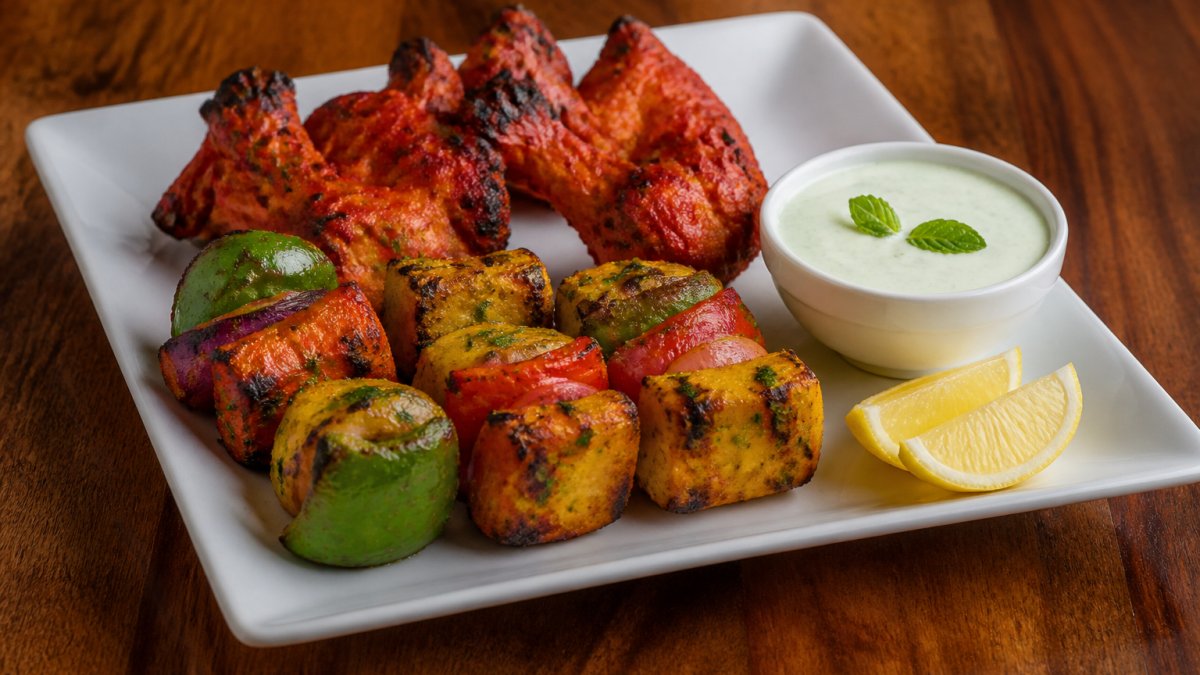
Lighter Indian takeaway starters come from the grill, not the fryer. This is where most orders go wrong, because the fried section of the menu is the cheapest and easiest to reach for.
Grilled starters worth ordering:
- Chicken tikka, marinated and cooked in the tandoor
- Seekh kebabs, made from minced meat and grilled on skewers
- Paneer tikka, charred cubes of cheese with peppers
- Tandoori prawns, quickly cooked and naturally lean
- Vegetable tikka, a good vegetarian option that is not deep-fried
Starters to skip if oil is your concern:
- Samosas and pakoras, which are deep-fried
- Onion bhajis, which absorb a lot of oil
- Anything described as “crispy” on an Indian menu
A grilled starter also travels better. Fried food steams in the container on the way to your door and turns soft and greasy. Grilled food arrives as it left the kitchen.
Swapping one fried starter for a grilled one is the single easiest change you can make to a takeaway order. It cuts a large share of the fat without touching the main course.
Healthy Indian Takeaway Options in Sheffield: What to Order
Healthy Indian takeaway options in Sheffield are easier to find than you might think, provided you know what to ask for. At Mezwaani, we cook fresh to order.
Our practical order for a lighter meal:
- Start with chicken tikka or paneer tikka instead of pakoras
- Choose a bhuna, jalfrezi or dal as your main
- Ask for steamed rice rather than pilau, which is cooked with oil
- Add a plain naan to share rather than one each
- Request less oil and sauce on the side
If you are ordering for a group across Sheffield, this approach still works. Order one richer dish for the table and balance it with grilled starters and dry curries. Everyone gets what they want, and nobody ends up feeling heavy.
The Food Standards Agency’s guidance on food hygiene is worth a glance if you want to check a kitchen’s hygiene rating before ordering. It will not tell you about oil, but it tells you plenty about how a kitchen runs.
For anyone searching for a lighter Indian takeaway near me, the rule is simple: ask the kitchen directly. A good restaurant will tell you honestly which dishes are cooked lighter.
Reheating and Serving Tips to Keep Your Takeaway From Turning Greasy
Reheating can undo a good order if you are not careful. Oil separates when food is heated too fast or too long, and that is when a decent curry turns greasy.
Do this:
- Reheat curries gently on the hob, stirring as they warm
- Skim any oil that rises to the surface with a spoon
- Reheat rice separately and thoroughly, never twice
- Serve grilled starters at room temperature or briefly warmed, not blasted
- Add a spoon of water to a thick curry to loosen it without adding fat
Avoid this:
- Microwaving on full power for several minutes
- Reheating fried food, which turns soggy and oily
- Leaving containers to sit out for hours before reheating
Never reheat rice more than once. Cooked rice can harbour bacteria that survive reheating, and the NHS advises eating rice within 24 hours of cooking. Reheat only what you plan to eat.
Serving matters too. Spoon the curry over rice rather than pouring the whole container in. You leave the oil behind in the tub, where it belongs.
Ordering a takeaway that leaves you feeling good rather than sluggish comes down to a few clear choices: ask for less oil, pick grilled over fried, and choose dry curries over cream-heavy ones. At Mezwaani, we cook fresh to order in Sheffield. Our menu covers everything from tandoori grills to dry-fried curries and fusion dishes, and our online ordering makes it easy to add a note to any dish. Get started with Mezwaani and enjoy the flavours of India without the grease.
Frequently Asked Questions
How can I make an Indian takeaway less oily?
Start by choosing dishes that are grilled, tandoori or tomato-based rather than creamy or deep-fried. When ordering, ask the kitchen to use less oil or ghee, and request sauces on the side where possible. At home, skim any pooled oil from the surface with a spoon or tilt the container and drain it before serving. Pair heavier dishes with plain rice or a fresh salad so the meal feels lighter overall.
What should I ask for if I want less oil in my curry?
Be specific and polite when you order. Ask for the dish to be cooked with less oil or ghee, or request a lighter version of the sauce. You can also ask whether the curry can be made with a tomato base rather than a cream base, and whether the sauce can be served separately. Most kitchens will accommodate a reasonable request, especially on quieter evenings or when ordering directly by phone.
Which Indian takeaway dishes are usually less oily?
Tandoori and grilled dishes, dal (lentil) curries, tomato-based curries such as madras or rogan josh, and dry-fried vegetable sides tend to be lighter than kormas, masalas or deep-fried starters. Plain rice, roti and chapati are also lower in added fat than naan or paratha. Asking for sauce on the side and choosing grilled starters over battered ones makes a noticeable difference to how greasy the meal feels.
Can a restaurant make a curry with less oil?
Yes, in most cases. Indian cooking often uses oil or ghee to build flavour and texture, but the amount can usually be adjusted without spoiling the dish. Calling the restaurant directly and asking for a lighter version of a specific curry is the most reliable approach. If you order online, add a clear note in the special instructions box, and follow up by phone for larger orders.
