

Table of Contents
- Why Modern Indian Fusion Is Taking Over Sheffield Dining
- Indo Chinese Food Sheffield Restaurants Are Serving Right Now
- The Difference Between Indo-Chinese and Indian Food
- Indo-Chinese Dishes to Try on Your First Visit
- Vegetarian Indian Fusion Sheffield Diners Can Actually Get Excited About
- What to Order at a Modern Indian Fusion Restaurant
- Dining In or Ordering Online: Making the Most of Your Visit
- Conclusion
- Frequently Asked Questions
Last Updated: October 19, 2026
Why Modern Indian Fusion Is Taking Over Sheffield Dining
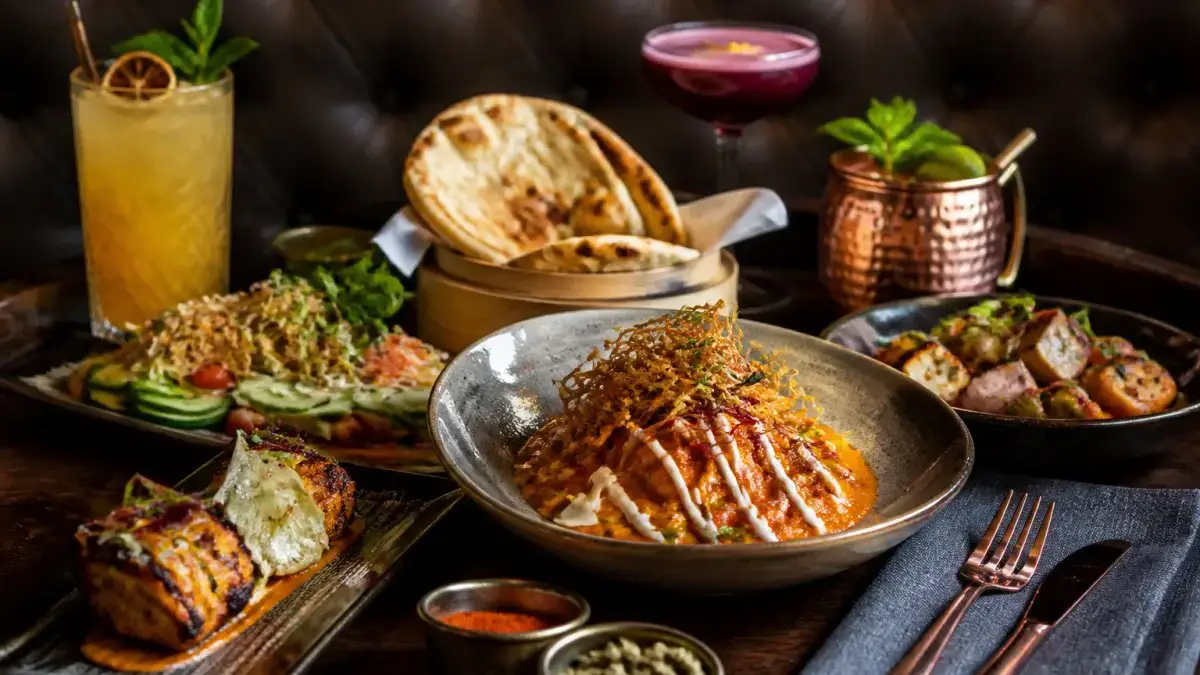
Sheffield’s food scene has always been a curious one. Steel built the city, but its appetite has become far more adventurous than its industrial past suggests. Walk through the city centre on a Friday evening and you’ll notice something: the queues outside the newest Indian fusion restaurant in Sheffield are not all students chasing cheap spice. They’re families, couples, and groups of friends who want something a little more interesting than a standard curry house. This guide from Mezwaani looks at what’s driving that shift and what to order when you sit down.
The appeal is straightforward. Modern Indian fusion takes the bold spices and rich traditions of Indian cooking and reworks them with techniques and ingredients from elsewhere. You get the depth of a slow-cooked curry next to something tangy, crisp, and completely unexpected. It’s the kind of food that suits a celebratory meal, because there’s always one more dish to try.
Below, we’ll break down the dishes worth ordering, the difference between Indo-Chinese and traditional Indian food, and how to get the most out of a visit. But first, here’s what most guides get wrong.
Indo Chinese Food Sheffield Restaurants Are Serving Right Now
Indo-Chinese food is the most popular fusion style in Sheffield right now, and for good reason. It’s the cooking that grew up in Kolkata’s Chinese-Indian communities: Chinese technique, Indian spice, and a flavour profile that belongs to neither tradition alone.
The dishes you’ll see most often are built on high heat and fast cooking. Think wok-tossed noodles with a chilli-garlic hit, or crispy vegetables in a glossy, tangy sauce. What makes it work is balance: the heat is there, but so is a little sweetness and a savoury depth that keeps you coming back for another spoonful.
If you’ve never tried Indo-Chinese food, Sheffield restaurants make it easy to start gently. Order a noodle dish alongside a curry and share both. You get the contrast without committing to a full menu of unfamiliar flavours.
The Difference Between Indo-Chinese and Indian Food
The difference between Indo-Chinese and Indian food comes down to technique and flavour balance. Indo-Chinese cooking uses Chinese methods like wok-frying and high-heat searing, combined with Indian spices and a sweet-savoury-tangy sauce base. Traditional Indian cooking leans more on slow cooking, layered spice blends, and gravies built from onions, tomatoes, and cream.
Where the Flavours Diverge
Traditional Indian dishes tend to build flavour slowly. Spices are toasted, onions are cooked down, and the sauce deepens over time. The result is warming and complex, with heat that sits underneath everything else.
Indo-Chinese dishes move fast. The spice is sharper and more immediate, and the sauce is often glossy and a little sticky. Soy, vinegar, chilli, and garlic do a lot of the work. You’ll notice the difference on the first bite: one style is comforting and rounded, the other is punchy and bright.
Neither is “better.” They suit different moods. A cold evening calls for a slow-cooked curry. A lively group dinner calls for a table full of sizzling plates and noodles to share.
Indo-Chinese Dishes to Try on Your First Visit
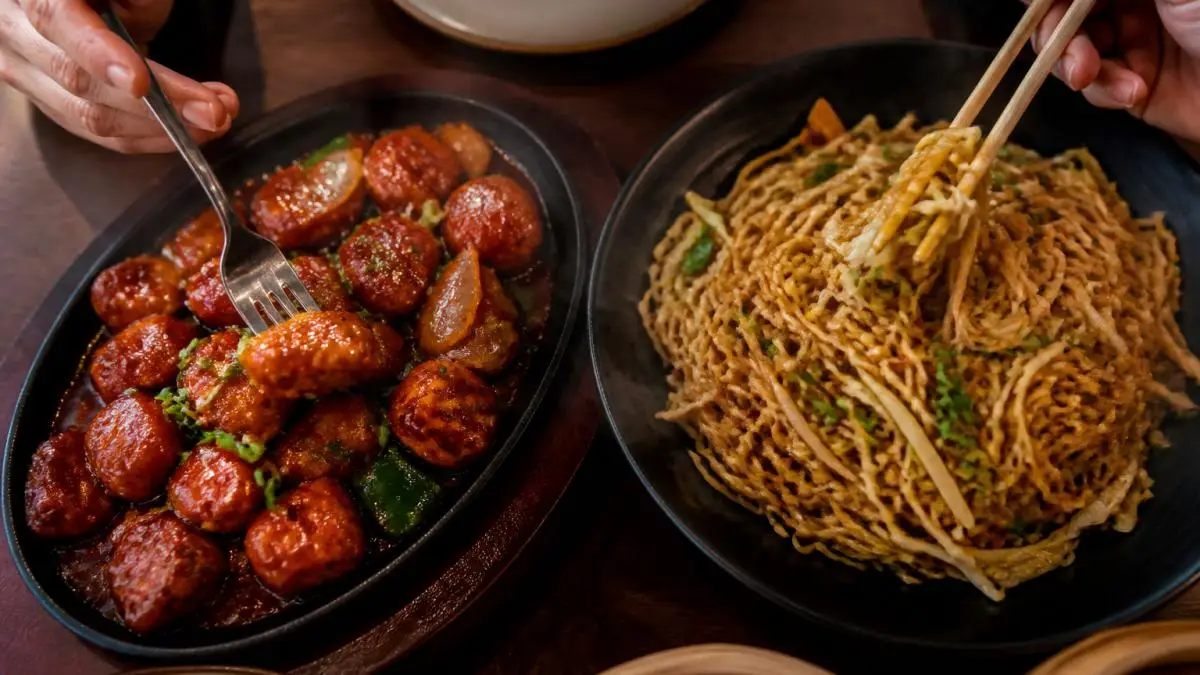
If it’s your first time ordering Indo-Chinese dishes to try, start with chilli paneer, hakka noodles, and a crispy vegetable dish. These three cover the range of the style: something spicy, something savoury, and something with crunch. Share them across the table so everyone gets a taste of each.
Here’s a shortlist worth working through:
- Chilli paneer: cubes of paneer tossed in a tangy, spicy sauce with peppers and onion. The dish most people order first, and rightly so.
- Hakka noodles: stir-fried noodles with vegetables and a savoury, slightly smoky finish. A safe bet for anyone new to the style.
- Crispy chilli vegetables: battered and fried, then tossed in a sticky sauce. The crunch is the point.
- Manchurian-style dishes: savoury, garlicky, and deeply satisfying, usually served as a sharing plate.
- Fried rice with a chilli kick: a familiar base made more interesting with the Indo-Chinese spice profile.
Order two or three between two people and add a curry if you want the contrast. That’s how we’d do it.
Vegetarian Indian Fusion Sheffield Diners Can Actually Get Excited About
Vegetarian Indian fusion Sheffield diners can get excited about is not an afterthought on a good menu. It’s often where the cooking is most creative, because the kitchen has to work harder to build texture and depth without meat.
The best vegetarian fusion dishes lean on contrast: something crispy against something soft, something cooling against something hot. Paneer is a staple, but so are mushrooms, cauliflower, and lentils, all given a modern treatment rather than a plain vegetable curry.
If you’re vegan, be specific when you order. Many fusion dishes use dairy in the sauce or as a garnish, so ask what can be adjusted. A good kitchen will tell you honestly rather than promise something it can’t deliver.
What to Order at a Modern Indian Fusion Restaurant
Ordering well at a modern Indian fusion restaurant comes down to balance. Pick one or two dishes with heat, one with freshness, and one with crunch. That mix keeps the table interesting and stops every dish tasting the same by the end of the meal.
A simple approach that works:
- Start with a sharing plate like crispy vegetables or Manchurian-style bites.
- Add one noodle or rice dish to anchor the table.
- Choose one curry for depth and comfort.
- Add a fresh side to cut through the richness.
- Ask for a recommendation if you’re unsure.
For a group of four, three or four dishes plus rice and noodles is usually plenty. Ordering more than that tends to leave food behind.
Groups of four to six who want to share a range of dishes and try a bit of everything, rather than committing to one main each.
Dining In or Ordering Online: Making the Most of Your Visit
Dining in gives you the full experience: the atmosphere, the sizzle of a dish arriving at the table, and the chance to ask questions about what you’re eating. It’s the better choice for a celebration or a group meal where the point is the occasion as much as the food.
Ordering online suits a different need. If you’re at home, feeding a family, or working late, delivery and takeaway make sense. The key is to order dishes that travel well. Noodles and curries hold up better than anything fried and crispy, which can lose its crunch on the journey. If you want the crispy dishes, eat in.
At Mezwaani, we offer online ordering for home dining alongside our dine-in service, so you can choose whichever suits the evening. We’re open daily, and our menu covers both traditional favourites and fusion dishes, which means a group with mixed tastes can all find something.
What most guides miss is that the atmosphere matters as much as the food. A celebratory meal needs a room that feels warm and welcoming, not just a good menu.
Conclusion
The challenge with fusion food is that it’s easy to get wrong. Too often it becomes a gimmick, with unfamiliar ingredients bolted onto familiar dishes for the sake of novelty.
At Mezwaani, we bring the vibrant flavours and rich traditions of India to Sheffield with a modern twist. Our multicuisine menu covers everything from tangy street-style favourites to comforting curries and fusion dishes, and our dining room is built for celebrations with friends and family. We’re open daily, and online ordering is available for home dining.
Get started with Mezwaani and discover what modern Indian fusion can taste like.
Frequently Asked Questions
Where can I find modern Indian fusion food in Sheffield?
Sheffield has a growing number of venues serving modern Indian fusion. Mezwaani offers a diverse multicuisine menu featuring traditional Indian flavours and fusion delights. Look for restaurants that describe their food as reimagined or fusion rather than purely traditional. Most fusion venues also offer online ordering for collection or delivery if you would rather eat at home.
How is Indo-Chinese cuisine different from traditional Indian food?
The difference between Indo-Chinese and Indian food comes down to technique and flavour balance. Traditional Indian cooking leans on slow-simmered spices, ghee and complex masalas, while Indo-Chinese dishes use high-heat wok cooking, soy sauce, vinegar, garlic and chilli for a sharper, tangier profile. Think hakka noodles and chilli paneer rather than biryani and dal. Both share Indian spices as a base, but Indo-Chinese food is faster, lighter in texture and built around street-food energy rather than slow-cooked richness.
Is Indian fusion food spicy?
It can be, but heat levels vary widely. Indo-Chinese dishes often carry a chilli kick from green chillies and chilli sauce, while modern fusion plates may balance spice with sweetness or tang. If you enjoy warmth without overwhelming heat, ask for medium.
Can I find vegetarian Indian fusion dishes in Sheffield?
Yes. Vegetarian Indian fusion Sheffield options have grown considerably, with dishes like chilli paneer, vegetable manchurian, paneer tikka wraps and spiced street-food small plates appearing on many menus. Vegan diners should ask which dishes use dairy, since paneer and ghee feature heavily in Indian cooking. A quick question when booking or ordering saves guesswork and makes for a better meal.