

Last Updated: November 5, 2026
Quick Summary
Indian fusion food works for events when you build the menu around small, crisp finger food such as chaat, samosas and tandoori skewers, then add fusion twists like chicken tikka tacos and masala mac and cheese. Plan six to eight small bites per guest for a two-hour gathering, and include one mild, one medium and one hot dish with chilli and chutney on the side.
- Chaat is the single best party format because it delivers sweet, sour, salty and spicy in one bite.
- Fusion twists like chicken tikka tacos and masala mac and cheese work well as a second wave.
- Paneer is a useful anchor for a vegetarian spread because it holds spice well.
- Budget grazing spreads run roughly £12-£18 per person, excluding venue hire, staff and VAT.
- Under Food Standards Agency allergen guidance, food businesses must provide accurate allergen information for every dish served.
Table of Contents
- Why Indian Fusion Food Suits Modern Events
- Indian Fusion Party Food Ideas That Disappear First
- Building a Vegetarian Indian Fusion Menu
- Indo-Chinese Dishes for Events and Sharing Tables
- Indian Party Menu Planning: Portions, Spice and Balance
- Dietary and Allergen Management for Event Catering
- Hosting an Indian Fusion Event in Sheffield
- Planning Your Indian Fusion Event Menu at Mezwaani
- Frequently Asked Questions
Why Indian Fusion Food Suits Modern Events
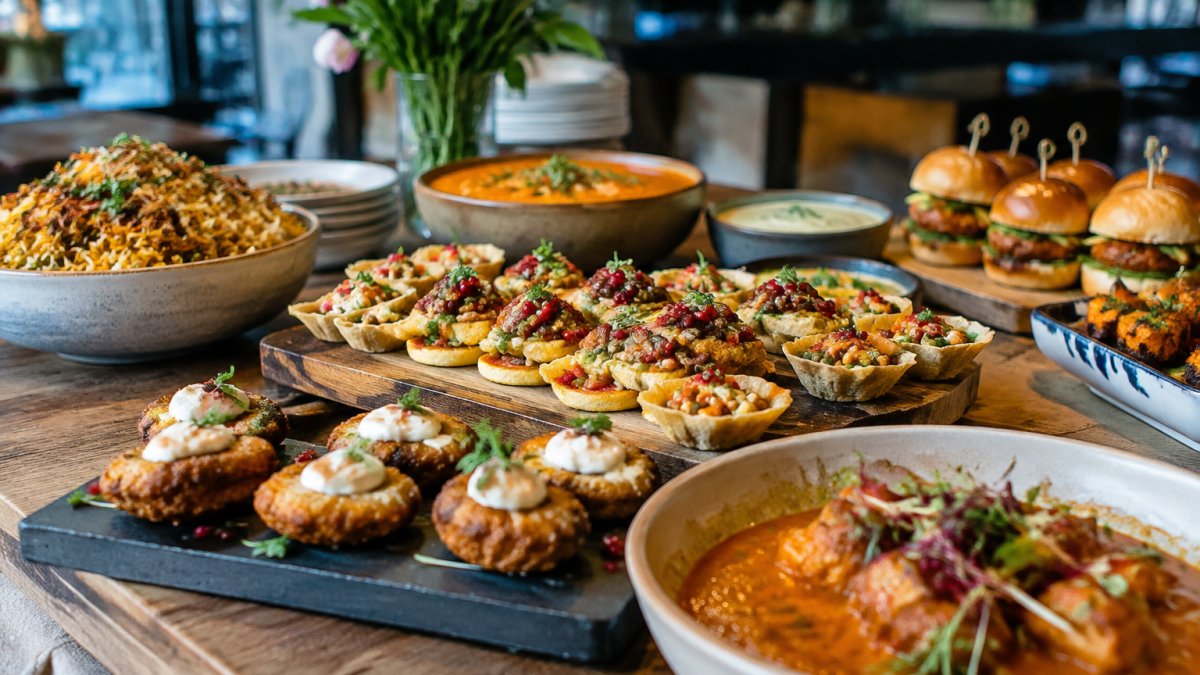
Indian fusion food is the pairing of classic Indian flavours, spices and cooking methods with dishes and formats from other cuisines. For events, it works because it gives guests familiar shapes with bold, unexpected tastes. At Mezwaani, our Sheffield kitchen builds fusion plates for exactly this reason: they start conversations.
Modern guest lists are mixed: heat-lovers, cautious eaters and a growing number of plant-based guests. A fusion spread can suit all three without a separate “special” plate.
Below, we break down the dishes that vanish first, how to build a vegetarian menu, and how to plan portions, spice and allergens for a real event.
Indian Fusion Party Food Ideas That Disappear First
The fastest-clearing items on any party table are small, crisp and easy to hold in one hand. Guests graze while they talk, so anything needing a knife and fork sits untouched. Build your first wave around finger food.
Chaat, Samosas and Finger Food
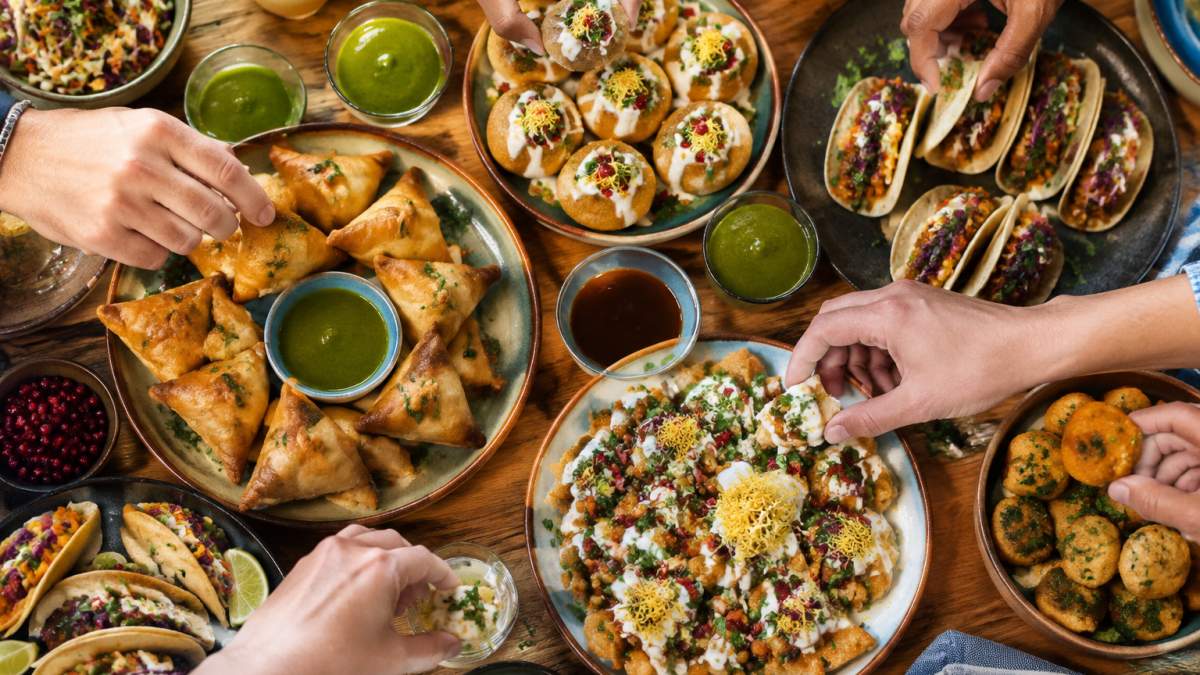
Chaat is a family of Indian street snacks built on crisp bases, tangy chutneys and cool yoghurt. It is the single best party format because it delivers sweet, sour, salty and spicy in one bite.
- Dahi puri: crisp shells filled with potato, chickpeas and yoghurt.
- Papdi chaat: flat crackers loaded with chutney, sev and pomegranate. Easy to plate in batches.
- Samosa: the crowd-pleaser. Serve with mint and tamarind chutney for dipping.
- Tandoori skewers: chicken or paneer, marinated in yoghurt and spice, then grilled.
For a fuller picture of what we serve, you can discover our menu.
Fusion Twists on Familiar Favourites
Familiar formats lower the risk for cautious guests. A fusion twist keeps the shape they know and changes the flavour.
- Chicken tikka tacos: warm flatbread, spiced chicken, slaw and a yoghurt drizzle.
- Masala mac and cheese: sharp cheddar with a hit of garam masala and green chilli.
- Butter chicken pasta: rich tomato-cream sauce over penne.
- Loaded masala fries: crispy potatoes with chaat masala, chutney and coriander.
These work well as a second wave, once guests have relaxed and started mixing.
Building a Vegetarian Indian Fusion Menu
A strong vegetarian spread should never read as the afterthought. Paneer is a useful anchor for a vegetarian spread: it holds spice well and works for meat-eaters too.
- Paneer tikka: charred cubes with peppers and onion.
- Palak paneer tartlets: creamy spinach and paneer in a crisp shell.
- Chana chaat cups: spiced chickpeas with onion, tomato and chutney.
- Aloo tikki sliders: spiced potato patties in soft buns.
- Vegetable samosas and onion bhajis: the reliable crispy favourites.
For the layers behind the heat, our guide on why authentic Indian food tastes so spicy helps when planning for guests who worry about spice.
Indo-Chinese Dishes for Events and Sharing Tables
Indo-Chinese food is the fusion of Indian spice with Chinese cooking techniques. It is savoury and built for sharing, which suits a buffet or a long table where plates get passed around.
- Chilli paneer: crisp paneer tossed with peppers in a tangy sauce.
- Hakka noodles: stir-fried with vegetables and a hit of soy and chilli.
- Gobi Manchurian: crispy cauliflower in a sticky, spicy glaze.
- Chicken lollipops: spiced wings shaped for easy eating.
Two or three of these alongside chaat and skewers add a savoury, saucy contrast to the tangy street food.
Indian Party Menu Planning: Portions, Spice and Balance
Good planning usually beats a bigger menu. Fewer dishes, done well, tend to land better.
How Much Food Per Guest
As a general planning guide, many hosts allow six to eight small bites per guest for a two-hour gathering, plus a main course if serving one.
Budget Tiers and Per-Person Estimates
Catering prices vary by dish complexity, service style and venue, so treat any figure as a planning band rather than a quote. A common pattern in Sheffield and the wider UK is:
- Budget grazing spread: roughly £12-£18 per person for cold and room-temperature finger food, chaat, samosas, bhajis and dips.
- Mid-tier hot buffet: roughly £20-£30 per person for two hot sharing dishes, a vegetarian anchor, rice or naan, and sides.
- Premium plated or canapé service: roughly £35-£50 per person and upwards, where staffing, crockery and plated presentation are included.
Watch out: these bands usually exclude venue hire, staff, equipment hire and VAT, so ask for a written breakdown separating food cost from service cost before comparing caterers.
Catering for Different Spice Preferences
Spice is the question we get asked most. Separate heat from flavour: build dishes that are deeply spiced but not punishing, then offer chilli and chutney on the side so guests control their own level. Always include one mild, one medium and one hot dish, clearly labelled.
A practical planning table helps you keep the spread balanced:
| Course | Dishes to include | Rough portion guide | Serve |
|---|---|---|---|
| First wave | Samosa, dahi puri, papdi chaat | 3-4 bites per guest | On arrival |
| Sharing table | Chilli paneer, Hakka noodles, skewers | 2-3 spoonfuls each | Buffet |
| Vegetarian anchor | Paneer tikka, aloo tikki sliders | 2-3 pieces per guest | Buffet |
| Sides | Naan, chutneys, dips | 1 naan per 2 guests; 30-50g dip per guest | Throughout |
| Dessert | Small sweet bites | 1-2 per guest | End of evening |
Ordering, Setup and Service Flow
Portion maths only works if the logistics match. Three operational points decide whether a spread lands:
If you are ordering for collection or delivery rather than full catering, ask how hot items will be packed. Our guide to Indian food delivery in Sheffield centre covers smaller gatherings at home.
Dietary and Allergen Management for Event Catering
Allergen planning is not optional, and in the UK it is a legal duty. Under Food Standards Agency allergen guidance, food businesses must provide accurate allergen information for every dish served. When you plan an event menu, ask your caterer for a written allergen breakdown for each item, not just a general statement.
The main allergens to flag in Indian fusion food are:
- Nuts: used in kormas, chutneys and some desserts.
- Dairy: yoghurt, paneer, ghee and cream appear widely.
- Gluten: in naan, some samosas and battered items.
- Sesame and mustard: common in marinades and chutneys.
For guests managing dietary needs, check our guide to Indian food delivery in Sheffield centre and confirm requirements with the restaurant when you order.
Hosting an Indian Fusion Event in Sheffield
A fusion menu can suit the mix of students, families and celebration crowds found in Sheffield. The city’s venues and transport shape the menu as much as the guest list does, so plan venue, timing and service style together.
Sheffield Venues and Local Logistics
Sheffield’s event spaces fall into a few practical types, and each changes how you serve:
Confirm postcode coverage and any minimum spend with the restaurant before setting the date.
Menus by Event Type
A single menu rarely suits every occasion. A workable pattern is:
- Weddings and receptions: passed canapés for the drinks reception, then a sharing buffet with a vegetarian anchor, two meat dishes, rice, naan and chutneys. Allow more per guest than a standard party because receptions run longer.
- Corporate events: bite-sized and easy to eat standing up, samosas, paneer tikka skewers, chaat cups and sliders, with clear labelling for allergens and spice levels.
- Birthdays and family gatherings: a generous sharing table with familiar fusion formats such as chicken tikka tacos and masala fries alongside chaat, so children and cautious eaters are covered.
- Cultural and community events: lean into Indo-Chinese sharing dishes and street-food stations, which suit grazing crowds and long service windows.
Service Styles and Event Operations
If you are planning a celebration in Sheffield, you can reserve a table and talk through your plans with our team. Phebe Akinyemi described her visit as having a great time, with the food, drinks and atmosphere she found “amazing”.
Planning Your Indian Fusion Event Menu at Mezwaani
A fusion event menu works when it is built around your guests, not just the dishes. Start with the crowd, then choose the bites, then sort the spice and allergens. That order saves time and money.
At Mezwaani, we bring authentic Indian flavours with a modern twist to Sheffield, and we are open daily. Our multicuisine menu covers tangy street food, comforting curries and fusion plates, and we can help you shape a spread for a celebration, family gathering or work event. We also offer convenient online ordering for home dining.
If you are weighing up where to hold your next gathering, our piece on why Indian dining is always a celebration explores the spirit we bring to every table.
Planning an event and want a menu that suits your guests and your budget? Get started with Mezwaani and build a fusion spread your guests will talk about long after the last samosa.
Frequently Asked Questions
What is Indian fusion food?
Indian fusion food takes traditional Indian flavours, spices and cooking methods and combines them with dishes or techniques from other cuisines. Common examples include Indo-Chinese dishes such as chilli paneer, masala-spiced tacos, tandoori chicken wings and curry-topped loaded fries. The aim is to keep the bold, aromatic character of Indian cooking while making it feel fresh and shareable for modern events, where guests want variety and something a little unexpected.
How much Indian fusion food should you plan per guest for an event?
Portion needs depend on the type of event, its length and the other food served. When booking, confirm portion guidance with the restaurant directly.
What vegetarian Indian fusion dishes work well at events?
Paneer is a common base for vegetarian Indian fusion dishes. Chaat dishes such as dahi puri and papdi chaat are typically vegetarian, as are samosas. Ask the restaurant which vegetarian options are available for your event.
How do you cater for different spice preferences at an event?
A common approach is to keep base dishes mild to medium and offer heat on the side through chutneys or sauces, so guests can adjust their own plate. Ask the restaurant how it labels spice levels for your event.
