

Last Updated: October 30, 2026
Quick Summary
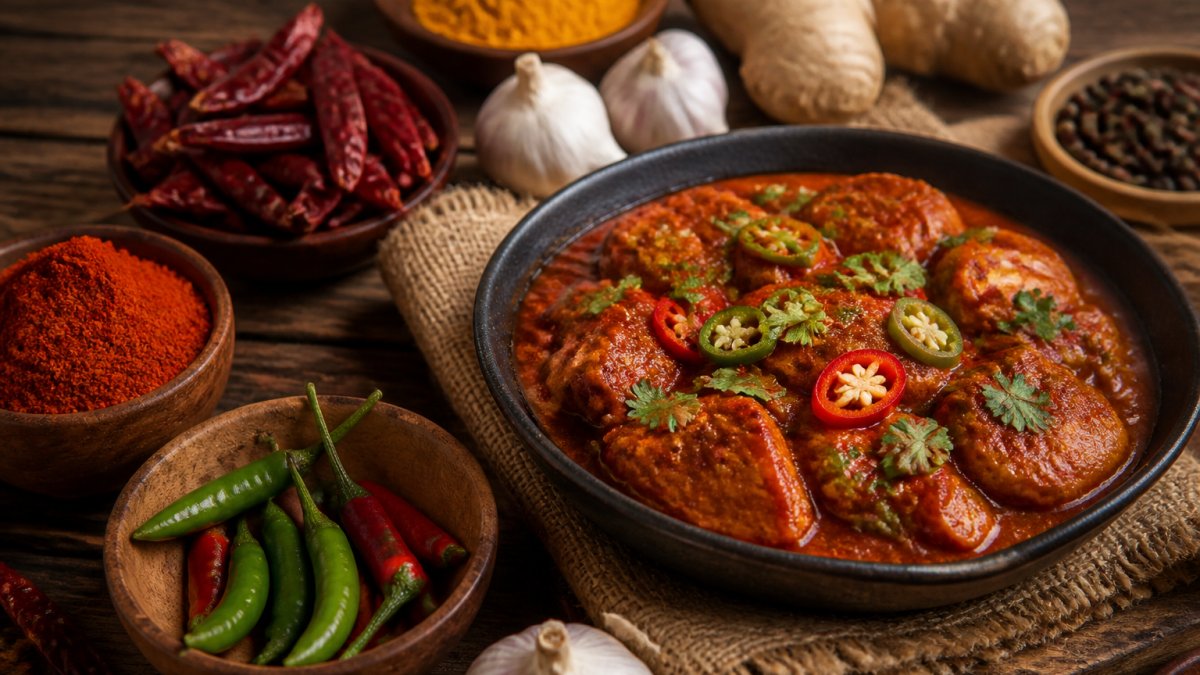
Authentic indian food spicy because spice is a structural part of how Indian cooking builds flavour, not a heat setting added at the end. Whole spices bloomed in hot oil and ground masalas layered in stages deliver aroma and depth, while chilli is used as one voice in a chorus rather than the whole performance.
- Spice is flavour and heat is a sensation; cumin, coriander, cardamom, cinnamon and cloves add no burn.
- Capsaicin, the compound in chillies, triggers the heat in a dish.
- Southern kitchens lean on black pepper, tamarind and dried red chillies for sharper, more direct heat.
- Northern cooking favours yoghurt-based gravies, cream, tomato and warmer spices, which softens the burn.
- Start mild with korma, pasanda, malai kofta, plain dal or a vegetable sabzi.
Table of Contents
- Why Is Authentic Indian Food Spicy? The Real Answer
- The Difference Between Spice and Heat
- Is All Indian Food Spicy? Separating Myth From Reality
- How Regional Indian Cuisine Differences Shape the Heat
- The Spices Behind the Flavour: What Actually Goes In
- Mild Indian Dishes That Prove Spice Does Not Mean Fire
- Ordering at Mezwaani: Finding Your Perfect Heat Level
- Frequently Asked Questions
Why Is Authentic Indian Food Spicy? The Real Answer
Authentic Indian food is spicy because spice is a structural part of how Indian cooking builds flavour, not a heat setting added at the end. At Mezwaani in Sheffield, we cook with whole spices bloomed in hot oil, ground masalas layered in stages, and chilli used as one voice in a chorus rather than the whole performance. That distinction matters, because most people asking why is authentic Indian food spicy are really asking why it burns. Usually, it doesn’t. Below, we break down where the heat actually comes from, which regions turn it up, and how to order exactly the level you want.
The Difference Between Spice and Heat
Spice is flavour. Heat is a sensation, and they are not the same thing. Cumin, coriander, cardamom, cinnamon and cloves deliver aroma and depth with no burn at all. Capsaicin, the compound in chillies, triggers the heat. A well-built masala balances both, which is why a dish can taste intensely spiced and still feel gentle on the tongue.
Here’s where most guides get it wrong: they treat “spicy” as a single dial from mild to volcanic. In an Indian kitchen it’s at least two dials, and often three. There’s the aromatic dial, the heat dial, and the sourness or sweetness that rounds everything off. Turn up the aromatics and the dish tastes rich and complex. Turn up the chilli and you get fire. Confusing the two is why people avoid Indian food they’d actually love.
Is All Indian Food Spicy? Separating Myth From Reality
No. Plenty of Indian dishes carry almost no chilli heat at all, and some of the most beloved ones are deliberately mild. The idea that every curry is a test of endurance says more about how Indian food was marketed abroad than about how it’s actually cooked.
Think about what a typical Indian meal includes. Yoghurt, rice, bread, pickles, chutneys and a dal are usually on the table alongside the main curries. Those are the cooling counterweights, and they’re not garnishes. They’re part of the design. A korma, a pasanda, a mild dal or a vegetable sabzi can be deeply flavourful without any real heat. If you’ve only ever ordered the hottest thing on a menu to prove a point, you’ve been eating a fraction of the cuisine.
How Regional Indian Cuisine Differences Shape the Heat
Indian regional cuisine differences explain most of the variation in heat, and they’re bigger than most diners expect. India is a subcontinent, and its cooking changes dramatically from coast to coast.
Broadly speaking, southern kitchens lean on black pepper, tamarind and dried red chillies, so dishes often carry a sharper, more direct heat. Northern cooking tends to favour yoghurt-based gravies, cream, tomato and warmer spices like cardamom and cinnamon, which softens the burn. Eastern regions bring mustard oil and panch phoron to the foreground, while western coastal cooking uses coconut and vinegar to mellow things out. The same dish name can taste completely different depending on which tradition it comes from. That’s not inconsistency. That’s the point.
The Spices Behind the Flavour: What Actually Goes In
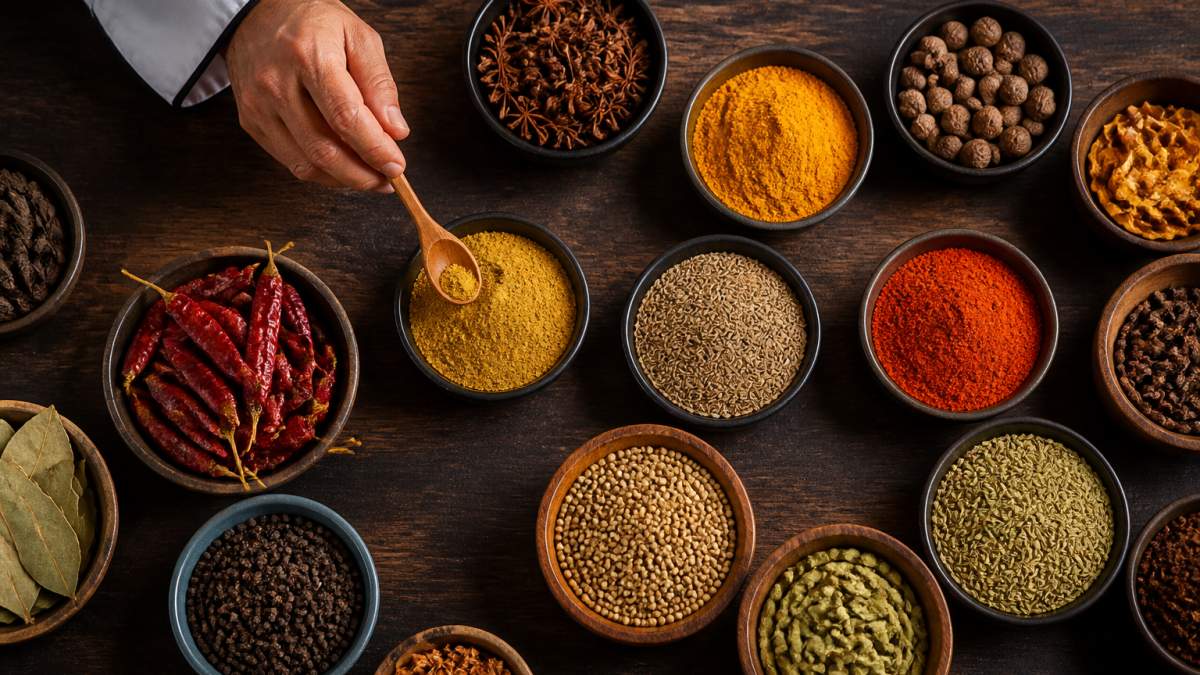
Turmeric gives colour and earthiness. Cumin and coriander form the backbone of countless masalas. Cardamom and cloves add sweetness and perfume. Chilli, when it appears, is there for heat and a fruity depth, not to dominate.
Mild Indian Dishes That Prove Spice Does Not Mean Fire
If you want to eat Indian food without the burn, start with a korma, a pasanda, a malai kofta, a plain dal or a vegetable sabzi. These dishes are built on yoghurt, cream, nuts and gentle spices, and they’re genuinely mild rather than apologetically bland. Understanding the delicate balance of these creamy foundations provides a perfect entry point for anyone curious about how to use Indian spices to craft their own nuanced flavor profiles at home.
Breads and rice are your allies too. Naan, roti and plain rice absorb sauce and give your palate a rest between bites. If you’re worried that a rich curry will sit heavily, our guide to avoiding oily Indian takeaway meals covers the lighter starters and ordering choices that keep things fresh. Mild doesn’t mean boring, and it certainly doesn’t mean a plate of plain vegetables. It means the aromatics are doing the work instead of the chilli.
Ordering at Mezwaani: Finding Your Perfect Heat Level
At Mezwaani, we’d rather you told us exactly how much heat you want than guessed from a menu description. If you’re ordering a takeaway to a Sheffield address and want it to arrive in good condition, our tips on how to order hot Indian takeaway that arrives perfect are worth a read before you dial.
The best way to choose is to look at the dishes themselves. Explore our menu to see the curries, street-style plates, desserts and drinks on offer, and how each one is described. If you want the story behind our approach to bold, authentic spice in the city, read about the Mezwaani experience and what we’re trying to build here.
| Your heat preference | What to ask for | Dishes to start with |
|---|---|---|
| No heat at all | Mild, no added chilli | Korma, malai kofta, plain dal |
| Gentle warmth | Mild to medium | Pasanda, vegetable sabzi, biryani |
| Medium | Standard house heat | Most chicken and lamb curries |
| Hot | Extra chilli, chef’s choice | Vindaloo-style and southern dishes |
Frequently Asked Questions
Why is authentic Indian food spicy?
Indian food spicy character comes from layers of spices, not just chilli. Black pepper, ginger and mustard seeds provide warmth, while cumin, coriander and turmeric build depth. Chillies arrived in India around the 16th century and became central to regional cooking, especially in the south. The result is food where heat supports flavour rather than masking it, and each region uses spices differently depending on climate, agriculture and tradition.
Is all Indian food spicy, or can I find mild options?
Not at all. Plenty of Indian dishes are mild or entirely chilli-free. Korma, pasanda, malai kofta and dal makhani rely on cream, yoghurt and gentle spices for richness. South Indian staples like idli and dosa come with chutneys you control. Rice dishes such as pulao and biryani can be made without heat. At Mezwaani, the menu spans street-style favourites to comforting curries.
What is the difference between spice and heat in Indian cooking?
Spice refers to the aromatic, flavour-building ingredients: cumin, coriander, turmeric, cardamom, cinnamon and cloves. Heat comes specifically from chillies and pepper and registers as a burning sensation. A dish can be deeply spiced without being hot at all. Understanding the difference between spice and heat helps you order confidently, because a richly spiced korma delivers complexity without the burn, while a simple chilli-forward dish can be hot with very little spice layering.
Which Indian dishes are mild rather than hot?
Mild Indian dishes include korma, pasanda, malai kofta, dal makhani, butter chicken (usually), aloo gobi and most biryanis served without extra chilli. South Indian idli and plain dosa are naturally mild, with heat coming from optional chutneys. When ordering, ask which dishes are prepared mild by default and whether heat can be adjusted.
The next time you order, tell us your heat level up front and let the kitchen do the rest. Mezwaani serves authentic Indian flavours with a modern twist, seven days a week, with a multicuisine menu built for sharing and celebrating. Browse the full selection, place your order for collection or delivery, and taste the difference that properly bloomed spices make. Get started with Mezwaani and find your perfect heat level tonight.
