

Table of Contents
- What Authentic Spice Profiles in Cooking Really Mean
- Regional Indian Cuisine Differences That Shape the Spice Profile
- Whole Spices vs Ground Spices: Which to Use and When
- How to Toast Spices So the Flavour Actually Shows Up
- When to Add Spices to Curry: The Order That Changes Everything
- Building and Balancing Your Own Spice Profiles
- Common Mistakes That Flatten a Spice Profile
- Conclusion
- Frequently Asked Questions
Last Updated: October 21, 2026
What Authentic Spice Profiles in Cooking Really Mean
Authentic spice profiles in cooking are the layered combinations of spices that give a dish its true regional character. At Mezwaani, we build ours from whole seeds toasted fresh, then ground and added in a deliberate order.
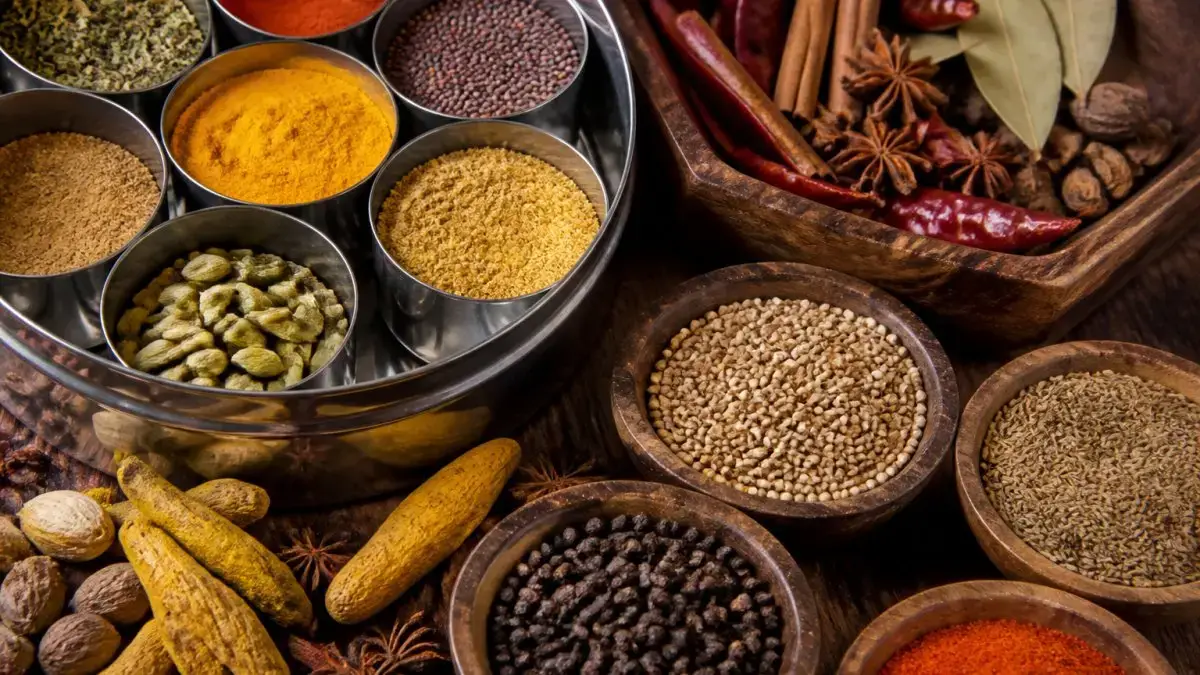
That distinction matters. Many home cooks treat spice as a single note: add chilli, get fire. Real Indian cooking treats spice as a chord. Cumin brings earthiness. Coriander adds citrus warmth. Cardamom lifts. Turmeric grounds everything.
Get the balance wrong and a curry tastes flat or harsh. Get it right and people ask what your secret is.
The NHS Eatwell Guide is a useful starting point for building balanced meals around those flavours. Below, we break down how regional Indian cuisine differences shape spice blends, and how to build your own at home.
A spice profile is a balance of aroma, heat, and warmth, not a heat level. If you can only taste chilli, the profile has failed.
Regional Indian Cuisine Differences That Shape the Spice Profile
Regional Indian cuisine differences explain why the same dish tastes different across the country. The north leans on warming spices like cinnamon and clove. The south favours curry leaf, mustard seed, and tamarind. The west, including Gujarat, often balances sweet with sour.
Consider how those regional styles show up in practice:
- Punjabi cooking: garam masala, ginger, and dairy-rich bases
- Keralan cooking: coconut, curry leaf, and black pepper
- Bengali cooking: panch phoron, a five-seed blend, with mustard oil
- Hyderabadi cooking: saffron, dried fruit, and slow-built heat
So when someone says a curry “tastes wrong,” they often mean it tastes like the wrong region. Learning these differences is the fastest route to cooking with confidence.
Whole Spices vs Ground Spices: Which to Use and When
Whole spices win on aroma; ground spices win on speed. Use whole seeds when a dish cooks long enough for them to release flavour slowly. Reach for ground when you need even distribution fast.
Here is how we think about the trade-off:
| Type | Best For | Flavour Release | Shelf Life |
|---|---|---|---|
| Whole spices | Slow curries, rice, pickles | Slow, steady | Longer |
| Ground spices | Quick dishes, marinades, rubs | Immediate | Shorter |
| Freshly ground | Finishing, high-aroma dishes | Strongest | Days only |
A common mistake is buying pre-ground spices and storing them for a year. They fade quietly. Whole seeds, toasted and ground at home, stay vivid far longer.
Buy whole spices in small amounts from a shop with fast turnover. Freshness beats brand every time.
How to Toast Spices So the Flavour Actually Shows Up
Toasting spices is the step most home cooks skip, and it is the one that changes everything. Dry-toasting whole seeds in a pan releases their oils and deepens their aroma before they ever hit the dish.
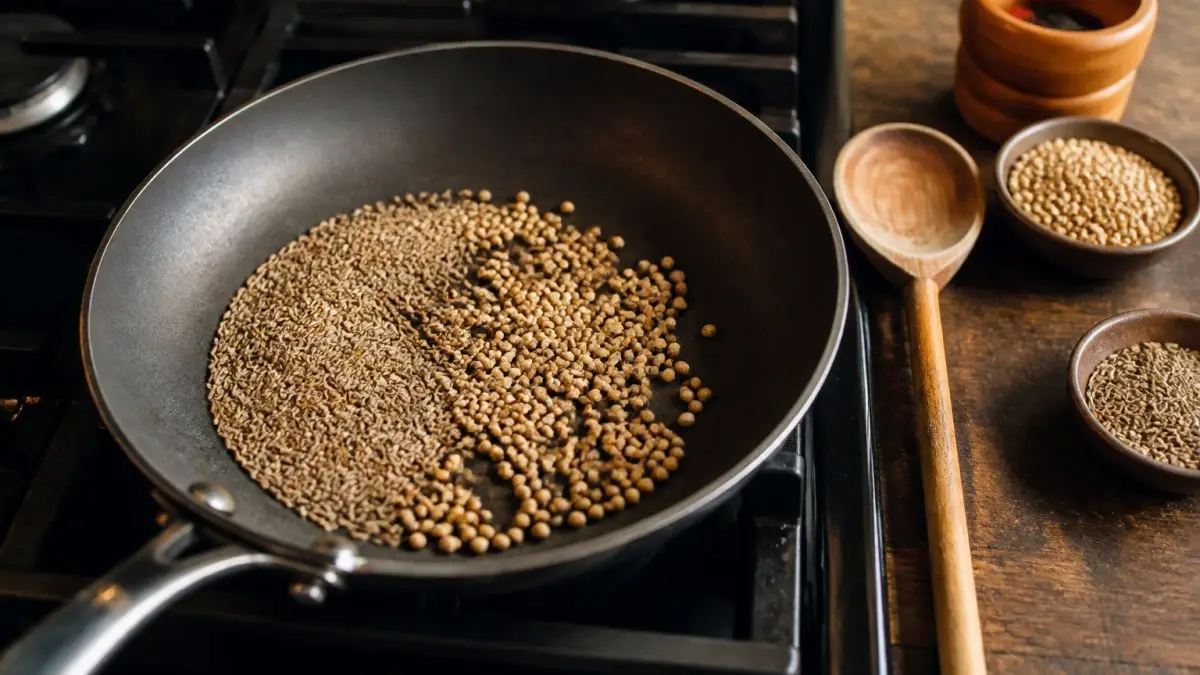
Here is how to toast spices properly:
- Heat a dry pan over medium heat.
- Add whole seeds in a single layer.
- Move them constantly for 30 to 60 seconds.
- Pull the pan off the heat the moment they smell nutty.
- Tip them onto a cool plate straight away.
Burn them and the whole dish turns bitter. There is no rescue. Ground spices need even less time, often just a few seconds.
When to Add Spices to Curry: The Order That Changes Everything
When to add spices to curry depends on what each spice needs. Whole seeds go into hot oil first. Ground spices follow into the oil or a paste. Delicate finishing spices go in last.
The order we use:
- Whole seeds into hot oil, until they crackle
- Aromatics like onion, ginger, and garlic, cooked down
- Ground spices added to the oil, not the liquid
- Finishing spices such as garam masala, stirred in at the end
Adding ground spices to liquid early makes them taste raw and dusty. Blooming them in oil first draws out their flavour. That single change lifts a curry more than any extra ingredient.
Building and Balancing Your Own Spice Profiles
Building your own spice profiles comes down to three levers: aroma, heat, and acidity. Start with one base spice, add one aromatic, then adjust heat and sourness to taste.
Try this simple framework:
- Base: cumin, coriander, or turmeric
- Aroma: cardamom, clove, or cinnamon
- Heat: chilli powder or fresh green chilli
- Sour note: tamarind, lemon, or amchur
Taste as you go. If a dish feels flat, it usually needs acid, not more salt. If it feels harsh, add a little sweetness or dairy. Balance is a conversation, not a formula.
Common Mistakes That Flatten a Spice Profile
The biggest mistake that flattens a spice profile is adding everything at once and hoping for the best. Spices need staging. They also need fresh stock and proper storage.
Watch for these traps:
- Storing ground spices in a warm cupboard for months
- Adding ground spices to cold liquid
- Overloading chilli and calling it flavour
- Skipping the toasting step entirely
- Using the same blend for every regional dish
Each one dulls the result. Fix them and your cooking shifts immediately. If you would rather taste what a properly built profile feels like, our kitchen in Sheffield serves dishes built exactly this way, and you can order online for home dining.
Never toast spices on high heat. They go from fragrant to acrid in seconds, and the bitterness spreads through the whole pot.
Conclusion
Cooking with authentic spice profiles is a skill anyone can build, one layer at a time. Start with fresh whole spices, toast them, and add them in the right order. Balance aroma, heat, and acid rather than chasing pure fire.
At Mezwaani, we cook this way every day. Our menu brings vibrant Indian flavours with a modern twist to Sheffield, with vegetarian, vegan, and Halal options, a warm setting for celebrations, and easy online ordering for home dining. Come taste the difference a properly built spice profile makes.
Frequently Asked Questions
What does a spice profile mean in cooking?
A spice profile is the overall flavour fingerprint a combination of spices gives a dish. It covers the warmth, heat, sweetness, earthiness and aroma that come from how spices are chosen, toasted and layered. Two curries can use the same six spices and taste completely different depending on the order they go into the pan and whether they were whole or ground. Thinking in profiles, rather than single spices, is what separates a flat curry from one with depth.
How do you create a balanced spice profile?
Start with a base of aromatics, then build warmth with spices like cumin and coriander, add heat separately with chilli, and finish with something bright or sweet. Taste as you go and adjust one element at a time. A useful rule is to keep heat, sweetness and acidity in proportion: if a dish tastes flat, a squeeze of lemon or a pinch of sugar often fixes it faster than adding more spice. Resting the dish for 20 minutes before serving also lets the profile settle.
Why are whole spices toasted before cooking?
Toasting whole spices in a dry pan releases their oils and turns raw, dusty flavours into something warmer and more fragrant. Cumin, coriander and fennel seeds transform in under a minute over medium heat. Keep the pan moving and take the spices off the heat the moment they smell nutty, because they burn quickly and turn bitter. Toasting is the single easiest step to make home cooking taste closer to restaurant food.
What is the difference between garam masala and curry powder?
Garam masala is a finishing blend, usually added near the end of cooking or sprinkled over a dish, and it varies by household and region. Curry powder is a British-era blend designed as an all-purpose seasoning and is typically added early with the other spices. Using garam masala as a base and curry powder as a finish rarely gives the result you want. For authentic spice profiles, treat garam masala as a garnish-level addition and let whole spices do the base work.